
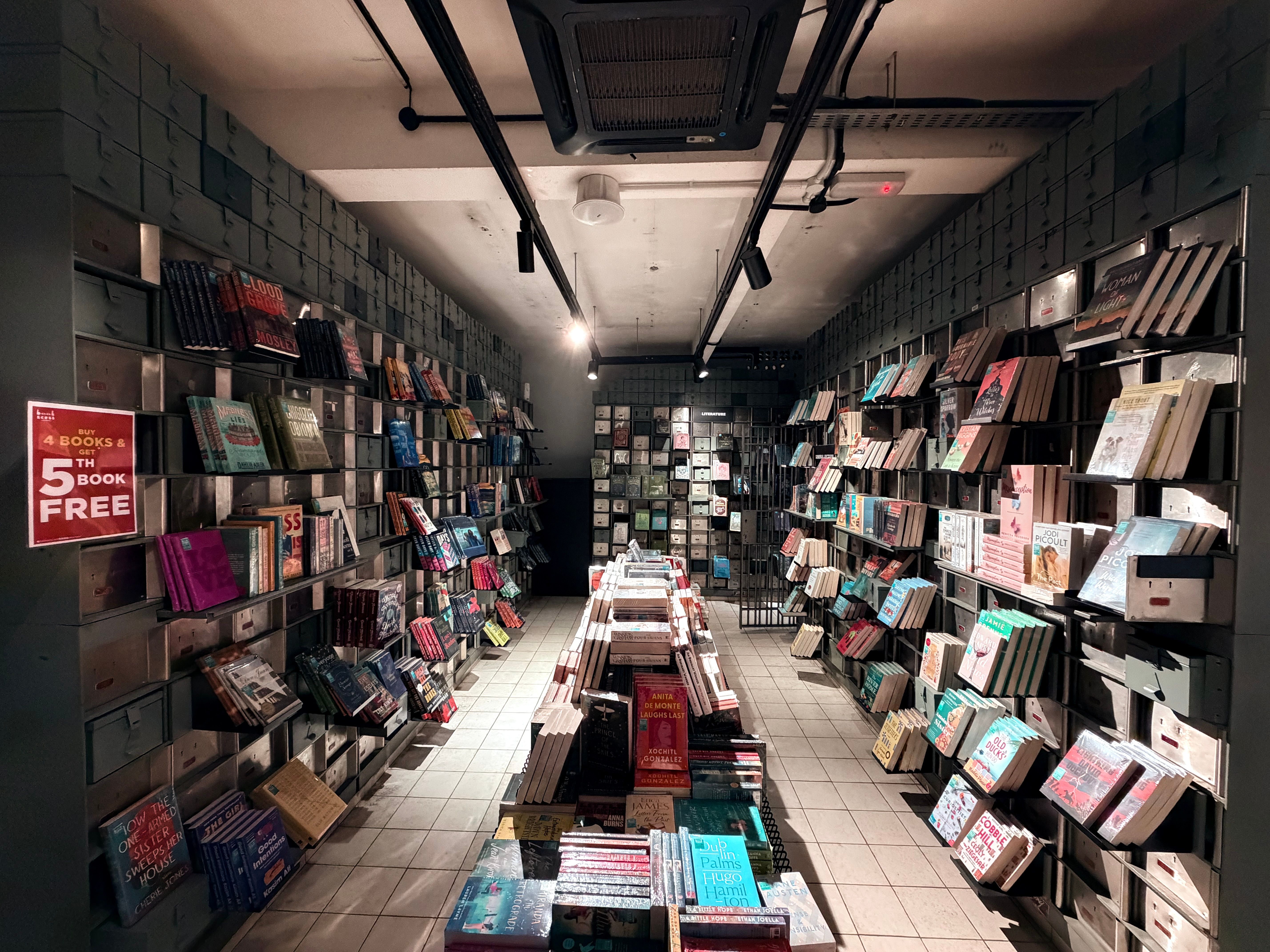
American airport bookstores stock a narrow, repetitive selection of business titles, and the pattern is not accidental. The shelf reflects a specific customer who has twenty minutes and a flight ahead.
The airport shopper is a different reader
A traveler moving through a concourse in Atlanta or Denver is not browsing for pleasure. The purchase is impulsive, made under time pressure, and often justified as useful rather than enjoyable.
That reader wants something that will hold up for the length of a flight and leave them with an idea they can repeat. Business books answer that want more neatly than most categories.
Publishers know it, and so do the retailers who lease those small storefronts. The assortment is chosen for a hurried buyer rather than for a reader who came in looking for something.
Shelf space is rented and ruthless
Airport retail carries high rent per square foot, which means every facing has to earn back more than it would in a suburban store. Slow titles are pulled quickly.
The result is a small rotating set of proven sellers plus a handful of new hardcovers with strong publisher support. Midlist business books rarely appear at all.
Because the space is so contested, publishers pay attention to which of their titles fit the format, and they acquire with that fit in mind long before publication.
Covers are designed to be read at a distance
An airport display is scanned from several feet away by someone walking. Type has to be large, the title short, and the contrast strong enough to register in peripheral vision.
This pushes business covers toward bold single words, high-contrast color blocks and a subtitle that explains the promise. Illustration and subtlety lose to legibility every time.
The same design then travels to online listings, where the cover shrinks to a thumbnail. What works on a concourse also survives being reduced to a small square.
Length is set by the trip, not the argument
A book that can be finished on a transcontinental flight feels like a completed purchase. That expectation pulls business titles toward a length that reads quickly rather than exhaustively.
Authors then structure around it, using short chapters, recurring case examples and summary lines that let a distracted reader rejoin the argument after an interruption.
The effect is a genre shaped partly by seat-back reading conditions, which explains why so many business books feel like an extended article rather than a dense study.
The channel feeds the author's other business
For many business writers the book is not the product. It is a credential that leads to consulting work, corporate training and paid speaking engagements.
Airport visibility is unusually valuable for that purpose, because the people passing through are exactly the executives and managers who hire speakers and buy training programs.
So the airport shelf functions less as a sales channel than as advertising to a target audience that is difficult to reach any other way.